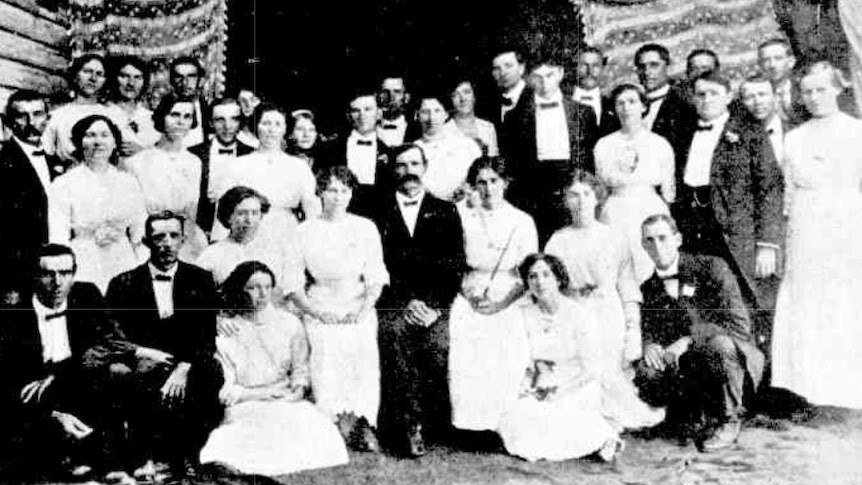
Interesting piece by the ABC's Emma Siossian, Taree's first eisteddfod in 1913 was an impressive feat of logistics and planning.
As Heritage website MidCoast Stories co-founder Penny Teerman noted, music festivals were popular in the early 20th century. In 1912, a limited but successful festival was held in Taree. This provided the impetus the following year for the formation of the Manning River Musical Festival Society - Penny calls it the Taree Musical Society but Trove searches suggest that it had a broader title - to put on a larger event with multiple activities. This was a considerable success with multiple performers and a large number of spectators.

I will leave you to read the story but wanted to make a few comments from my perspective as an historian of the broader New England.
I was not sure about the use of the word eisteddfod. I think that the first named eisteddfod was put on in Ballarat in 1855 by Welsh miners attracted to the new gold fields, but widespread use of the name as opposed to musical festivals came later. I checked Trove, and the name eisteddfod was indeed usedTransport difficulties limited the scope of major events. On the North Coast where river transport was possible, events would draw along river routes. As the railways spread, they provided a means of drawing in a broader audience or group of participants. The 1913 Taree eisteddfod followed the opening of the railway. Participation still focused on surrounding areas but broader participation was possible, We can see this in 1913: participants came from regional areas linked by the railway but participation from the more distant Leichardt Boys Choir was also possible if more expensive
I noted the Kurri Kurri Choir. Music was an important form of shared entertainment on the coal fields. The number of attendees at band performances is a sign of just how popular local band music was.





