Friday, November 06, 2015
Updated History blog list
I have now completed editing my current history blog list page. Each entry should now open in a new window. If you have a history blog or know of one that you think should be included, please email me at ndarala(at)optusnet(dot)com(dot)au.


Wednesday, November 04, 2015
History Revisited - ice factor in ancient lives

COUNTRY CHANGES: A clue as to why the Aborigines did not use the bow and arrow can be found in the Danish National Museum. The spear was a more efficient weapon in open terrain.
Have you
ever wondered why the Australian Aborigines never adopted the bow and arrow?
They had access to the technology, for the bow and arrow was used by New Guinea peoples with whom the Aborigines on Cape York had regular contact.
On the
surface, adoption of bow and arrow would seem to have made great sense. It’s a
fearsome weapon, useful in hunting as well as warfare. In fact, the Aborigines
probably rejected it on a purely practical grounds.
While I had
always suspected this, I hadn’t properly realised why until my visit to the Danish National
Museum
There I found that the heavy glaciers that
had covered much of Denmark
Around 8,300 years ago, temperatures rose
sharply. The reindeer moved north, to be replaced by elks and aurochs, a now
extinct wild ox. Both are seriously big animals. Looking at the skeletal
remains in the museum, my first thought was just how hard and dangerous the
hunt must have been.
As temperatures rose, the previous open
forest was replaced by dense forest of aspen, birch and pine. This was the
point at which bows and arrows appear to have replaced spears as the primary
hunting weapon and for purely practical reasons. In thick bush, a bow and arrow
was a more effective weapon than a spear.
The position in Australia
This is also where regular burning emerged
as a cultivation device. Down on the Liverpool Plains, for example, fire kept
the country open, encouraging the animals that the Aborigines liked to hunt.
The Danish experience also throws light on
the reasons why the Aborigines did not adopt farming.
We know that the Aborigines knew about
garden cultivation in New
Guinea
If we now look at the Danish experience, we
find that the hunter-fisher culture survived for millennia in co-existence with
emerging agricultural communities further south. The reason was quite simple.
Why bother?
The Danish hunter-fisher communities could
make a decent living from their traditional life style. They could also and did
trade with the emerging agricultural communities, providing raw materials in
return for goods. There was no need to change; they were doing quite well as it
was.
Something similar applied in Australia
Note to readers: This post appeared as a column in the Armidale Express Extra on 28 October 2015. I am repeating the columns here with a lag because they are not on line outside subscription. You can see all the Belshaw World and History Revisited columns by clicking here for 2009, here for 2010, here for 2011, here for 2012, here for 2013, here for2014, here for 2015.
Wednesday, October 28, 2015
History Revisited - Danish insights on New England's past

CELEBRATING THE PAST: Jim Belshaw spent hours in the Danish National Museum during his recent trip to Europe
I have been away, arriving back from Europe Saturday very jet lagged. While the primary
objectives of the trip were to spend some time with eldest and to follow the
Rugby World Cup, history became an inevitable part of the journey. I can’t help
myself, you see!
The trip began in Copenhagen Copenhagen
The Danish National
Museum
The University
of New England was one of the first in
Australia
With this background, several things struck
me as I looked at the exhibits and explanations on the different stages in the
prehistory of that area that would become Denmark
At 43,000 square kilometres, Denmark Northern NSW .
The second thing that struck me, and I was
to feel this many times over the trip, was the advance in knowledge since I
first studied Australian and world prehistory. It’s actually daunting.
At the highest level, the combination of
new techniques in areas such as DNA analysis and dating are constantly
reshaping our understanding of the deep human past. To a degree, this has
outrun our capacity to absorb new knowledge, at least at popular level. There past
but now invalidated conclusions remain firmly fixed in our minds.
At local level, work done by Danish
archaeologists has pushed back dates and provided a detailed understanding of
the changing pattern of human life in the face of constant environmental
change. I was especially interested in the impact of the freezing Late Glacial
Maximum (LGM) and then the subsequent warming associated with the arrival of the
Holocene period.
In some of my columns I tried to tell the New England story of these periods. Now I was comparing
my local understanding with the patterns in another place.
There are obvious similarities as well as
differences. In both New England and Denmark Denmark
As the LGM eased, the climate became
warmer, while sea levels started to rise. Both plant and animal life responded
to these changes, leading to progressive changes in patterns of human life. In
both Denmark and Northern NSW , land was reoccupied, while human
populations increased with more intense utilisation of the stabilising
landscape.
However, there were also significant differences
in response between the two areas directly associated with differences in food
resources and raw materials. I will continue this story in my next column.
Note to readers: This post appeared as a column in the Armidale Express Extra on 21 October 2015. I am repeating the columns here with a lag because they are not on line outside subscription. You can see all the Belshaw World and History Revisited columns by clicking here for 2009, here for 2010, here for 2011, here for 2012, here for 2013, here for2014, here for 2015.
Wednesday, September 23, 2015
History Revisited - a celebrated life for Gardner
Oban
cemetery, November 1973. Around 100 people gathered to see the unveiling of a
headstone for William Gardner, the pioneer chronicler of Northern Tablelands’
life.
By then,
many historians had drawn from Gardner Gardner
I suspect
that we don’t sufficiently recognise the importance of the work done by the
Society over the years since its formation. This is a simple example of its
enduring legacy. I draw on its work all the time.
Back at
Oban, Lionel Gilbert gave a short talk on Gardner
But who, in
all this, was William Gardner?
William Gardner (1802-1860) was born in Glasgow , Scotland Scotland
arriving in Sydney
We know little of Gardner ’s
life in the thirty six years before he sailed for Sydney US
After working in a store at Maitland, Gardner moved to the newly-opened New
England plateau about 1842, becoming a tutor at the late Henry
Dumaresq's Saumarez station near
Armidale.
A keen horseman, Gardner travelled widely
over the district, and compiled the first detailed map of the northern
districts of New South Wales
From 1853 Gardner
was employed as tutor at Moredun (October 1853–September 1854), Rockvale
(October 1854–September 1855), Mount Mitchell ,
and at Andrew Coventry's Oban station (1858-60).
There were not many available single women
at this period, and he seems to have enjoyed his single life. Instead, he
devoted himself to wide and varied cultural interests. These included sketching
and later photography as well as writing. A sound judge of horses, he advised Gideon
Lang in 1857 on the selection of horses for the Indian army.
We know from descriptions and reminiscences
that he was highly respected and greatly missed, including by those he taught.
Not a bad legacy, I think.
Note to readers: This post appeared as a column in the Armidale Express Extra on 16 September 2015. I am repeating the columns here with a lag because they are not on line outside subscription. You can see all the Belshaw World and History Revisited columns by clicking here for 2009, here for 2010, here for 2011, here for 2012, here for 2013, here for 2014, here for 2015.
Wednesday, September 16, 2015
History Revisited - Armidale plays a big role in Proctor's life

GLAMOROUS EVENT: Thea Proctor's interest in decorative work strengthened by her participation in annual The Chelsea Arts Club Ball.
Artist Thea
Proctor was 23 or just 24 when she arrived in London
In addition
to her close relationship with George Lambert, she mixed with the other
Australian expatriate artists including Charles Condor, Arthur Streeton and Tom
Roberts, artists whose paintings can be found in the New England Regional
Art Museum
Proctor
became preoccupied with line, colour and form, concentrating on drawing and
water colour painting. Here she was influenced by Condor’s fan designs,
Japanese prints and the drawings of the French neo-classical artist Jean-Auguste-Dominique Ingres. Her interest in decorative work was
also highlighted by the Chelsea Arts Club balls with their elaborate costumes
and through exposure to the Ballets Russes.
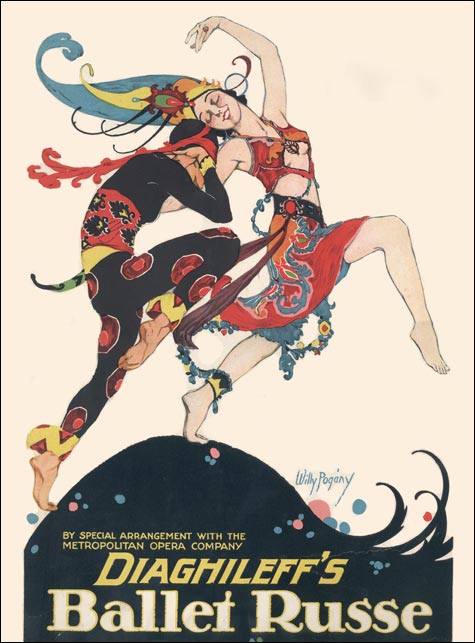
Founded by impresario Sergei Diaghilev in
1909, the Paris
The impact on Thea seems to have been
considerable. .After seeing the Ballets Russes in 1911, she exclaimed “it would
be difficult to imagine anything more beautiful and inspiring”.
Thea’s art works, her decorative fans and
drawings, were well received. However, I am left wondering at the extent to
which this focus was gender connected. We know from other writing including the
biographies of Australia
Thea returned to Australia
in 1912, but finding the market unresponsive she moved back to England Australia
In Sydney
The next year, she joined with Lambert and
others to found the Contemporary Group to promote young avante garde artists.
While Proctor’s work achieved considerable
critical and indeed popular success, she needed to supplement her income
through teaching art and writing.
Always elegantly dressed and considered an
arbiter of taste, Thea wrote on fashion, flower arranging, colours for cars and
interior decoration. In the 1920s she organized artists' balls; in 1932 she designed
the fashionably modern Lacquer Room restaurant for Department store Farmer
& Co; and in the 1940s produced theatre décor.
Thea continued to paint throughout her life
and to play an active role in encouraging young artists. Unmarried, she died at
Potts Point on 29 July 1966. It had been a long and interesting life from her
birth in Armidale and those early years at NEGS.
Note to readers: This post appeared as a column in the Armidale Express Extra on 9 September 2015. I am repeating the columns here with a lag because they are not on line outside subscription. You can see all the Belshaw World and History Revisited columns by clicking here for 2009, here for 2010, here for 2011, here for 2012, here for 2013, here for 2014, here for 2015.
Wednesday, September 09, 2015
History Revisited - Thea Proctor: from NEGS to the art world of Edwardian London

SCHOOL GROUNDS: Renowned artist Thea Proctor lived in Armidale for a brief period before returning to study at the New England Girls School. Proctor would go on to study art in the vibrant world of Edwardian London.
For most,
to be born or educated in Armidale is to leave the city. Their journeys have
taken them all over the world and into every aspect of life.
Artist Alethea Mary (Thea) Proctor was born
in Armidale on 2 October 1879, the oldest child of William Consett Proctor and
his Queensland
Thea’s father had come to Armidale as a
solicitor. He became involved in local government and was Mayor of the City in
1877. In December 1880, he was elected to the NSW Legislative Assembly as
Member for New England , a position he was to
hold until January 1887.
Some time
after his election, the family moved to Sydney
It is not
clear what contact Thea retained with her father or, later, with her half
brothers and sisters. Following the separation, she went to live at Bowral with her maternal grandparents. They encouraged her interest
in art. artistic pursuits. In 1894, while attending Lynthorpe Ladies' College,
Thea won a prize at the Bowral Amateur Art Society's exhibition. Because of
this connection, Bowral claims Thea as its own.
In 1896, Thea enrolled at Julian Ashton's
art school. The school emphasized drawing and the latest decorative ideas in
composition.
This was an exciting time in Australian art.
Thea became fully absorbed in a world in which art and personal relations were
closely interlinked. Her fellow students included Elioth Gruner, George Lambert
and Sydney Long. She became briefly engaged to Long in 1899, but it was with
Lambert she formed the closest relationship.
In 1899, she worked with with Lambert,
Long, and others on the short-lived Australian Magazine.. Then in 1903, Thea followed
the now established art trail to London where
she studied at St John's
Wood Art
Schools
Years later, she retained this beauty. “Miss
Proctor received us in something between a tea gown and a peignoir”, Barry
Humphries would write. :”She was tall and still very beautiful, with her long
hair caught back in a bun. One recognised without difficulty the striking young
woman who appears in more than one of George Lambert’s most celebrated paintings.”
The exact relationship between Proctor and
Lambert remains uncertain. She posed for him and frequented his household. She found
him intellectually stimulating, became 'doggedly devoted' to him, establishing
a life long friendship. It was clearly a friendship that had multiple levels.
It may seem a long way from Armidale and
the NEGS dormitories of the 1880s to the vibrant intellectual life of London and Paris
I will complete Thea’s story in my next
column.
Note to readers: This post appeared as a column in the Armidale Express Extra on 2 September 2015. I am repeating the columns here with a lag because they are not on line outside subscription. You can see all the Belshaw World and History Revisited columns by clicking here for 2009, here for 2010, here for 2011, here for 2012, here for 2013, here for 2014, here for 2015.
Wednesday, September 02, 2015
History Revisited - Aboriginal nurse Emma Jane Callaghan: the lady who became an institution

HOME SWEET HOME: Emma Jane Callaghan was born at the La Perouse Aboriginal Reserve in 1884. This photo shows a a group at La Perouse from the 1890s. Emma would go on to build a career in nursing and in promoting Aboriginal health.
Emma Jane Callaghan (1884-1979) was a
remarkable woman whose life was recorded by Shay Ann Kelly.
Born at the La Perouse Aboriginal Reserve
in Sydney
she was the younger twin of William Foot
and Kathleen Sims. William was a fisherman, while Kathleen was a member of the
Dharawal tribe.
Emma injured her head when she was four.
She was looked after by Retta Dixon who would found the Aborigines' Inland
Mission of Australia, establishing a relationship that would shape Emma’s life.
Although she had left school after third
grade, Emma wanted to be a nurse. About 1903 Dixon
took her to visit the Dunggutti (Dainggatti) people at the Nulla Nulla
Aborigines' Reserve near Bellbrook in the Upper Macleay
Valley
Emma decided that she had a mission to help
her people. Two years later she returned to Bellbrook. There she held religious
services in the open air under trees or in the small tin church on the reserve,
learning to play the organ. She also helped older Aboriginal women when they
assisted in childbirth, earning their trust and respect.
Emma registered Aboriginal births.
regularly searching the camps and humpies for sick people, crossing flooded
creeks and riding through the bush to tend her patients: At the time,
Aboriginal people were not admitted to Kempsey hospital and would not be until
an annexe was built in the 1930s.. She also buried the dead with the police as
witnesses.
At Bellbrook, Emma met and fell in love
with a young Dunggutti labourer, Athol Callaghan. They married on 20 September
1909 at the Nulla Nulla Reserve. Athol was 22, three years younger than Emma. They
would have eleven children.
Apart from her other skills, Emma was a
competent needlewoman. She made her own hats and clothes as well as clothes for
the community including wedding dresses and ball gowns. She also extended her
knowledge of the local language, translating Bible stories into Dunggutti.
Athol developed tuberculosis. Around 1928,
the family moved to Armidale to be closer to medical facilities. There Emma
displayed again that energy that was such a trade mark feature.
Emma herself became highly respected and
encountered no personal prejudice. However, that was not universally true for Armidale’s
Aboriginal community who were living in appalling conditions on the fringes of
the town.
Emma again practiced as midwife to her
people, nursing them without charge She lobbied the mayor and the Anglican
bishop until her family obtained a house.. This became an impromptu hospital
and doctor’s surgery, with Dr Elle n
Kent Hughes regularly visiting to see patients.
After seven years in Armidale, the family
returned to La Perouse at Athol’s request. There Emma bought a block of land
near the mission and built a timber and fibro house to plans provided by her
friend Kent Hughes.
Note to readers: This post appeared as a column in the Armidale Express Extra on 26 August 2015. I am repeating the columns here with a lag because they are not on line outside subscription. You can see all the Belshaw World and History Revisited columns by clicking here for 2009, here for 2010, here for 2011, here for 2012, here for 2013, here for 2014, here for 2015.
Wednesday, August 26, 2015
History Revisited - Dymphna Cusack: writing her own story

RENOWNED PLAYWRIGHT: Armidale educated Dymphna Cusack travelled the World during her writing career
From time to time in this column I have
commented on the many writers with New England
connections. Dymphna Cusack (1902-1981) is another such writer.
Dymphna Cusack was born in 11 September
1902 at Wyalong, the third of six surviving children of Beatrice and James
Cusack. The combination of straightened family circumstances with the girl’s
ill-health led to her being brought up by her childless aunt and uncle, Nell
and Tom Leahy at Guyra.
Dymphna was very much alone during those bush
years apart from her Aunt and Uncle and her cat, William Adolphus. However she
loved animals, fishing and time spent outdoors. Her uncle was a keen fisherman,
and they often went fishing together. Later, she would live in many great
cities across the world, but she remained a bush girl at heart.
The child read omnivorously. She also
discovered a love of teaching when the headmaster at Guyra Primary (“what a
man! what a teacher!) let her take over lower classes when their teachers were
away.
In 1917, Dymphna was sent to board at St
Ursula’s in Armidale. I have commented before on the contribution that St
Ursula’s made to New England ’s cultural life.
Founded by German nuns in 1882, the school still (in Dymphna’s words) “bore
their imprint in its reverence for learning for learning’s sake, and in its
rigid discipline.”
Importantly, the school trained girls for
University entrance. As a consequence, in 1920 Dymphna won an exhibition and
Teachers’ College scholarship to study at the University of Sydney
Dymphna wrote her first play while at
University, followed by three more that were all well received. In 1936 came
her first published novel, Jungfrau , a
tale of personal relationships and moral conflicts based on her University
experiences.
By the time of her death, she had published
twelve novels (two of which were collaborations), seven plays, three travel
books, two children's books and one non-fiction book. She also helped Catherine
Edmonds write Caddie. Caddie, Red Sky at Morning, and Come
in Spinner (written with Florence James) all became Australian films or
television shows. Another . book, Heatwave
in Berlin, was staged and televised across the Soviet
Union as part of the 1965 celebrations of the twentieth
anniversary of victory over fascism.
The themes in Dymphna’s work reflected her
changing life experiences, taking her far from that early New
England life. Yet her love of the county remained and was
reflected in some of the descriptions and memories contained in her writing.
In 1961 she returned to her earlier
memories in Picnic Races. The setting
is the imaginary gold mining town of Gubba , one
that combines echoes of Bathurst and Goulburn as
well as her beloved New England .
Her husband, Norman Freehill, described the
book as a deceptively light-hearted yet profoundly critical study of rural Australia
The sometimes malicious anecdotes and passing
descriptions in the book would be instantly recognisable even today, a trait
that she shares with other New England
writers.
Note to readers: This post appeared as a column in the Armidale Express Extra on 19 August 2015. I am repeating the columns here with a lag because they are not on line outside subscription. You can see all the Belshaw World and History Revisited columns by clicking here for 2009, here for 2010, here for 2011, here for 2012, here for 2013, here for 2014, here for 2015.
Tuesday, August 25, 2015
Janine Rizzetti's review of Klaus Neumann's Across the Seas: Australia’s Response to Refugees. A History

‘Across the Seas: Australia’s Response to Refugees. A History’ by Klaus Neumann.
From Janine's summary, I suspect that this is a book I should read for both personal and professional reasons. I also hadn't realised until I read the post that former Fraser Government Immigration Minister Michael MacKellar had died. Janine has a link to his obituary in the Age. .
From Janine's summary, I suspect that this is a book I should read for both personal and professional reasons. I also hadn't realised until I read the post that former Fraser Government Immigration Minister Michael MacKellar had died. Janine has a link to his obituary in the Age. .
Wednesday, August 19, 2015
History Revisited - Mallaby shared his soap with the world

AUSTRALIAN INFLUENCE: Armidale's renowned soap maker travelled to Paris for the World Exhibition in 1900
In an earlier column on Armidale industry,
I referred to Mallaby’s Soap. Its golden bar soap was perfect for toilets or
washing laces, silks and woollens, while scrubbing the table, floors, pots and
pans with Mallaby’s pumice stone soap made them much cleaner.
I don’t remember Mallaby’s Soap, production
finished by early 1942, but I certainly remember those scrubbed tables that you
used to find in country kitchens.
In 1900, George Mallaby attended the World
Exhibition in Paris Eiffel Tower
The old European order that would be swept
away by the Great War was its peak, and countries vied with each other for the
grandeur of their exhibits, joined by chambers showcasing science and industry.
If you google the Exhibition, you will find early colour photos of the whole
show. It was quite something.
It is not clear what Armidale’s George
Mallaby made of the whole thing, although I’m sure that he found it
interesting. His purpose was more pragmatic, to exhibit his soap for which he
apparently won a gold medal. He also took the opportunity, and this was
probably the primary purpose of the trip, to visit England
We know from John Harvey’s story of his
grandfather (New England Lives II) that George Mallaby was born on 13 December
1860 at Osset, West Riding, Yorkshire . On 21
May 1882, George married the twenty year old Faith Furness. Both had been
working in the mills.
In August the following year, the young
couple set sail for Australia
By the time of George’s visit to England
I have written before about the way the new
Great Northern Railway reduced many local activities because of the competition
from imported goods. In the Mallaby case, George was able to use the railway to
gain business, shipping soap south to Werris Creek, north to the Queensland
Many of the patterns of life in Armidale
and the North more broadly were linked to varying forms of religious
observance. The Mallabies were strict Methodists, although Faith and George
appear to have mellowed somewhat in later years.
Saturdays were preparation for Sundays,
with the boys filling the wood box and polishing shoes. On Sunday, oldest
daughter Emma stayed home to prepare the roast while the rest of the family
went to church. No embroidering or reading for pleasure was allowed, while
music was limited to hymns.
George Mallaby died in 1926, Faith died
less than a year later. By then, the young couple from working class England
Note to readers: This post appeared as a column in the Armidale Express Extra on 12 August 2015. I am repeating the columns here with a lag because they are not on line outside subscription. You can see all the Belshaw World and History Revisited columns by clicking here for 2009, here for 2010, here for 2011, here for 2012, here for 2013, here for 2014, here for 2015.
Subscribe to:
Posts (Atom)